We provide ornamental plant health throughout the OL12 and OL15 postcode districts of Littleborough, from Hollingworth Lake to Smithy Bridge, and in nearby Rochdale, Todmorden and Shaw. Every job starts with a free site visit in Littleborough, where we measure up, check access and talk through options before sending a written quote.
When a prized acer starts dropping leaves in June or the roses in a Littleborough front garden turn orange with rust, the owner usually wants someone to look at it properly rather than reach for the nearest spray. Littleborough Landscaping & Driveways offers an ornamental plant health service that does exactly that. It covers feeding, pest control and disease management for the shrubs, roses, climbers, specimen trees and container plants that give a garden its structure, and it is aimed at homeowners who have invested in good plants and want them to last.
The approach is diagnosis first. A yellowing camellia might be short of iron, waterlogged, planted in the wrong soil or suffering from scale insect, and each of those has a different fix. Our team looks at the plant, the soil and the situation before recommending anything, and we are frank when the honest answer is that a plant is in the wrong place and will never be happy there.
We work across Littleborough and treat plant health as part of the garden's year rather than an emergency call-out. Where the trouble is in the beds themselves, our Garden Bed Care service deals with soil and weeds, and Flowering Plant Care handles deadheading and division.
Ornamental Plant Fertilising
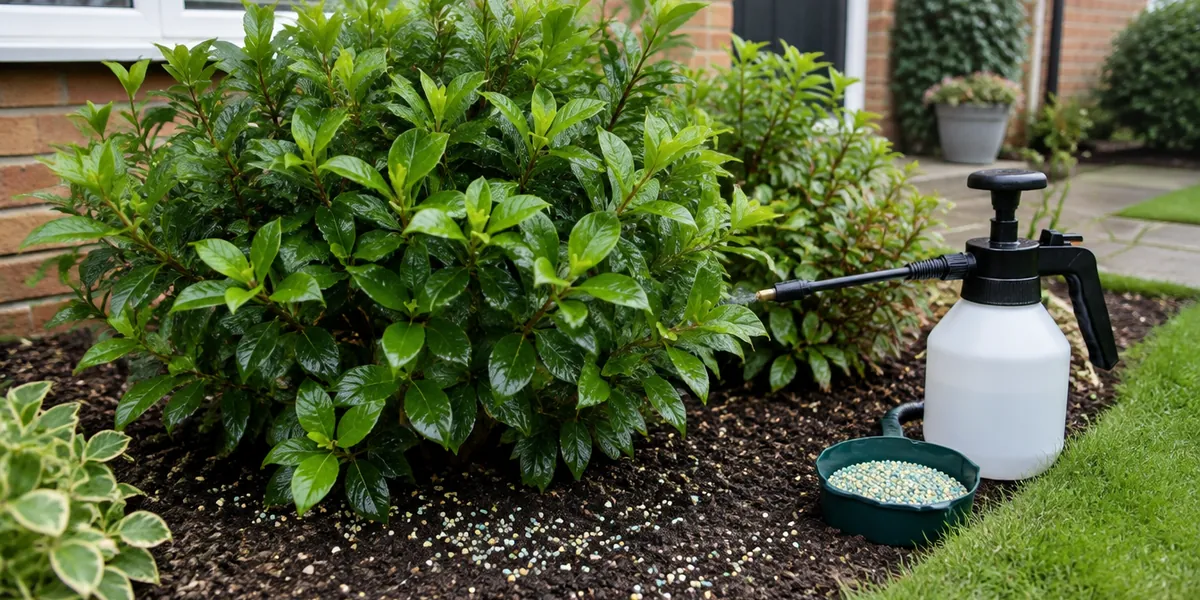
Most garden soils in Littleborough will support a shrub without any feeding at all, but supporting it and getting the best from it are different things. Roses, clematis, hydrangeas, camellias and anything in a container are hungry plants, and a planned feeding programme makes the difference between a few flowers and a display.
We match the feed to the plant and the season. In late winter or early spring, as growth begins, established shrubs and roses get a balanced granular fertiliser forked lightly into the soil surface and watered in, followed by a mulch of compost or manure to hold moisture and feed slowly through the year. Acid-loving plants such as rhododendrons, camellias, pieris and blue hydrangeas receive an ericaceous feed and, where the leaves show yellowing between the veins, a chelated iron treatment. Container plants are fed with a liquid feed every couple of weeks from May to August, because the nutrients in potting compost run out within six to eight weeks.
Timing is as important as product. We stop nitrogen-rich feeds by late summer so that new growth hardens before the first frosts. A high-potash feed in late summer helps roses and fruiting shrubs ripen their wood instead.
We do not overfeed. Too much fertiliser produces lush, weak growth that aphids and mildew love, and it washes into drains. A soil test on the first visit tells us what is actually lacking, and we apply only what the plants will use.
Ornamental Plant Pest Management
The pests that cause real damage to ornamental plants in Littleborough are a short list: aphids and blackfly on soft new growth, vine weevil grubs in containers and on heucheras, lily beetle, box tree caterpillar on box hedging, scale insect on bay and camellia, and slugs and snails on anything with soft leaves. Each has a window of activity and a method that works, and spraying everything in sight is not it.
Our approach is integrated. We check plants on each visit so problems are caught early, when a squashed cluster of aphids or a hand-picked lily beetle solves it. We avoid broad-spectrum insecticides that kill ladybirds and lacewings along with the pests. Box tree caterpillar is treated with a biological spray based on a naturally occurring bacterium, applied from April when the caterpillars are feeding. Vine weevil grubs are dealt with by drenching containers with nematodes in late summer and again in spring, when the soil is warm enough for them to work.
Where a targeted product is the right answer, we use it correctly: the right concentration, in still weather, in the evening when bees are not foraging, and never on open flowers. We hold the relevant certification for applying pesticides and we follow the label.
Prevention matters more than cure. Overfed, overcrowded or stressed plants get attacked first, so good spacing, airflow and watering reduce the problem before it starts. A few aphids on a rose in May will be eaten by June, and it is often better to wait than to spray.
Ornamental Plant Disease Management
Fungal and bacterial diseases are harder to deal with than pests because by the time the symptoms show, the infection is established. The common ones in Littleborough gardens are black spot, rust and mildew on roses, box blight, honey fungus on shrubs and trees, coral spot on dead wood, and the leaf spots and cankers that affect laurel, photinia and prunus. Phytophthora root rot shows up in wet, heavy soil and is often mistaken for drought.
Hygiene is the first line of defence. Fallen rose leaves carrying black spot are collected and removed, not composted. Infected prunings go off site and secateurs are cleaned between plants. Dead and crossing wood is cut out so air can move through the plant, which alone controls a great deal of mildew and coral spot.
Where a disease is active, we treat according to what it is. Rose fungal diseases respond to a programme of preventive fungicide applications starting in spring, combined with pruning for airflow and feeding for vigour. Box blight is harder: we can slow it with trimming in dry weather, clearing fallen leaves and fungicide, but we will tell you honestly if the hedge is too far gone. Honey fungus has no chemical cure, so management means removing infected material, improving drainage and choosing resistant replacements.
Many symptoms that look like disease are environmental: scorch from reflected heat, yellowing from waterlogging, die-back from planting too deep. We check the roots and the soil as well as the leaves before we name the problem, and we put the diagnosis in writing.
Why Choose Us for Ornamental Plant Health in Littleborough
Plant health is diagnosis before treatment, and most of the damage we see in Littleborough gardens comes from the wrong fix applied with confidence. Our team looks at the whole picture, from the soil and drainage to how the plant was put in. Sometimes the answer is to do nothing and let the ladybirds work. Sometimes it is to move the plant. We say so either way.
Where products are needed, they are applied by people certified to use them, at the right dose and the right time, with bees and the neighbours' gardens in mind. Infected material leaves with us under our waste carrier registration so disease is not spread around your plot. Every treatment programme comes with a written guarantee on the work, and we record what we have done so there is a history to refer back to.
Because we are local to Littleborough, we can respond quickly when something goes wrong in the middle of the season, which with pests and disease is often the difference between a scare and a loss.
Ornamental Plant Health: Step by Step
- Inspection: we examine the affected plants, their roots where possible, the soil and the surroundings, and take photographs for reference.
- Diagnosis in writing: you receive a short report naming the problem, its likely cause and the options, including the option of doing nothing.
- Quote and programme: a written quote covers any treatments, feeds and follow-up visits across the season.
- Hygiene and pruning: dead, diseased and crossing wood comes out, fallen debris is cleared and the material is removed from site.
- Feeding and soil correction: the right fertiliser, mulch or soil amendment is applied to put the plant in a position to recover.
- Targeted treatment: biological controls, nematodes or an approved product are used where needed, applied at the correct time and strength.
- Monitoring: follow-up visits check progress and adjust the plan, with notes kept for the next season.
If a plant in your Littleborough garden is not going to recover, we would rather say so early than keep treating it.
How Ornamental Plant Health Is Priced in Littleborough
The number of plants involved and the size of the garden set the baseline, since a single sick acer in a courtyard is a very different job from a rose garden with black spot throughout. The nature of the problem matters as much: a one-off nematode drench is quick, while a season-long fungicide programme on a large collection of roses means repeated visits.
Materials are itemised. Fertilisers, chelated iron, biological controls and approved products vary in price, and some need a certified applicator and the right conditions, which affects scheduling. Container collections cost more to look after than the same plants in open ground because each pot is fed and checked separately.
Access in Littleborough affects time on site, especially for rear gardens reached through the house. Finally, early intervention is cheaper than rescue work, so the sooner you call about a problem, the less it usually costs to put right. Everything is set out on a written quote before we begin.
Ornamental Plant Health Throughout Littleborough
We diagnose and treat plant problems throughout Littleborough. If your garden in Smithy Bridge is mature, honey fungus and box blight among older shrubs and hedges are the problems we look for first. In Wardle, if you garden in containers or a courtyard, vine weevil control and a feeding programme are the main call. If you grow roses and climbers in Hollingworth Lake, they benefit from a spring-to-autumn fungal programme. If your garden in Calderbrook is on heavier soil, a case of root rot often turns out to be drainage, and in Summit we look after several acer and camellia collections. We also cover nearby Rochdale, Todmorden and Shaw for homeowners with plants worth protecting.
Planning more than one job? Have a look at garden maintenance and garden bed care.
Your Questions Answered
My shrub has yellow leaves. Is it a disease or something else?
Often neither. Yellowing between the veins on camellias, rhododendrons or hydrangeas usually means the soil is too alkaline for the plant to take up iron. General yellowing on heavy soil frequently points to waterlogging. Only some yellowing is pest or disease related. We check the soil, the roots and the planting depth before deciding, because the fix is different in each case.
Do you use chemical sprays on plants in Littleborough?
Only where a targeted product is the right tool, and then applied by a certified operator at the correct strength, in still weather and away from open flowers. Our first choices are hygiene, pruning, feeding, biological controls and nematodes. Many problems resolve without any spray once the plant is growing well and its natural predators have caught up.
Can box blight be cured?
It can be managed but not reliably cured. Trimming in dry weather, clearing fallen leaves, improving airflow and a fungicide programme will slow it, and lightly affected hedges often recover. Severely infected box is usually better replaced with a resistant alternative such as Ilex crenata or Euonymus. We tell you which situation you are in after inspecting the hedge.
How often should ornamental shrubs be fed?
Established shrubs in open ground do well with one balanced feed in early spring plus a mulch of compost or manure. Roses, clematis and hydrangeas benefit from a second feed in early summer. Container plants need liquid feeding every two weeks from late spring to late summer. We stop nitrogen feeds by August so new growth hardens before frost.
What is eating holes in my lilies and hostas?
Scarlet lily beetle and its larvae strip lilies and fritillaries from April onwards; we hand-pick adults and treat larvae if numbers are high. Hosta damage is almost always slugs and snails, which we manage with wildlife-friendly pellets, barriers and nematodes, plus keeping the base of the plant clear of debris where they shelter during the day.