We offer garden drainage and levelling work across the whole of Littleborough, including Calderbrook, Hollingworth Lake and Smithy Bridge, as well as nearby Rochdale, Todmorden and Shaw. Each Littleborough job starts with finding where the water comes from and where it can go, before we suggest a fix. Call 07886 065 535 or email [email protected] to arrange a free site visit.
Standing water after every shower, a lawn that squelches until May, a slope that washes soil onto the patio each winter: these are drainage and levelling problems, and Littleborough Landscaping & Driveways fixes them for homeowners throughout Littleborough. Our garden drainage and levelling service covers three things. Garden drainage installation gets water off the surface and away, using French drains, gullies and soakaways. Garden levelling and grading reshapes the ground so water goes where it should and lawns can be mown and used. Erosion control holds banks and slopes in place with matting and planting so they stop sliding.
These jobs are groundworks, and we approach them that way. We dig trial holes to see what the soil does, we set levels with a laser rather than by eye, and we think about where every litre of water ends up before we start, because moving a puddle onto a neighbour's garden or against your own house wall is not a fix. Much of this work is done in Littleborough as the first stage of a bigger project, before a new lawn, patio or planting goes in, but we also take on drainage and levelling as standalone jobs. Every one begins with a site visit and a written quote.
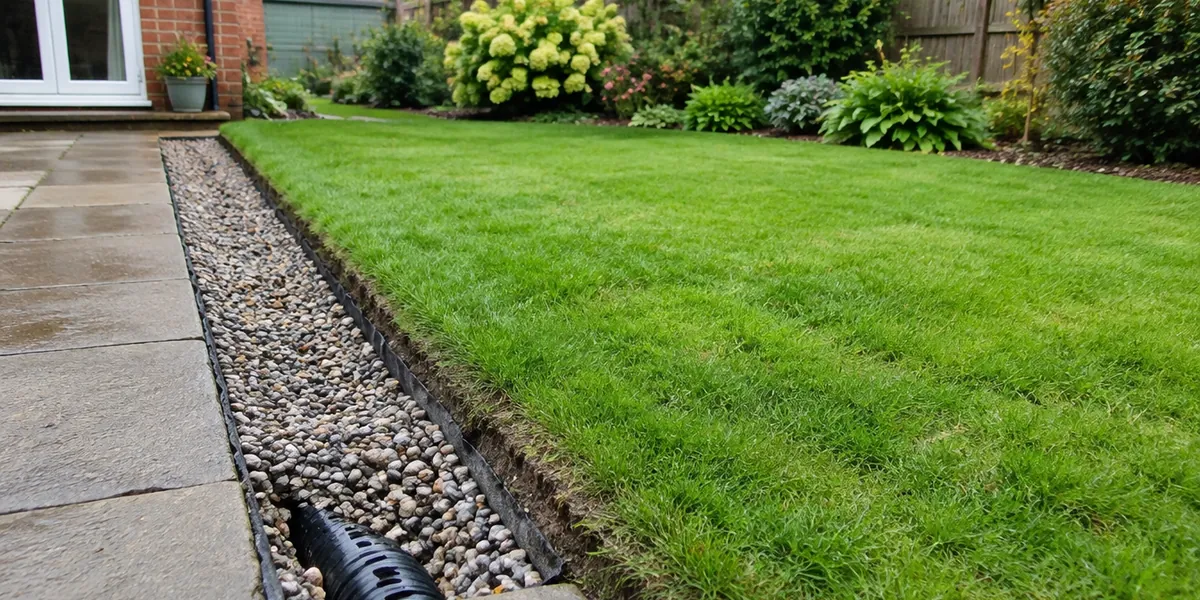
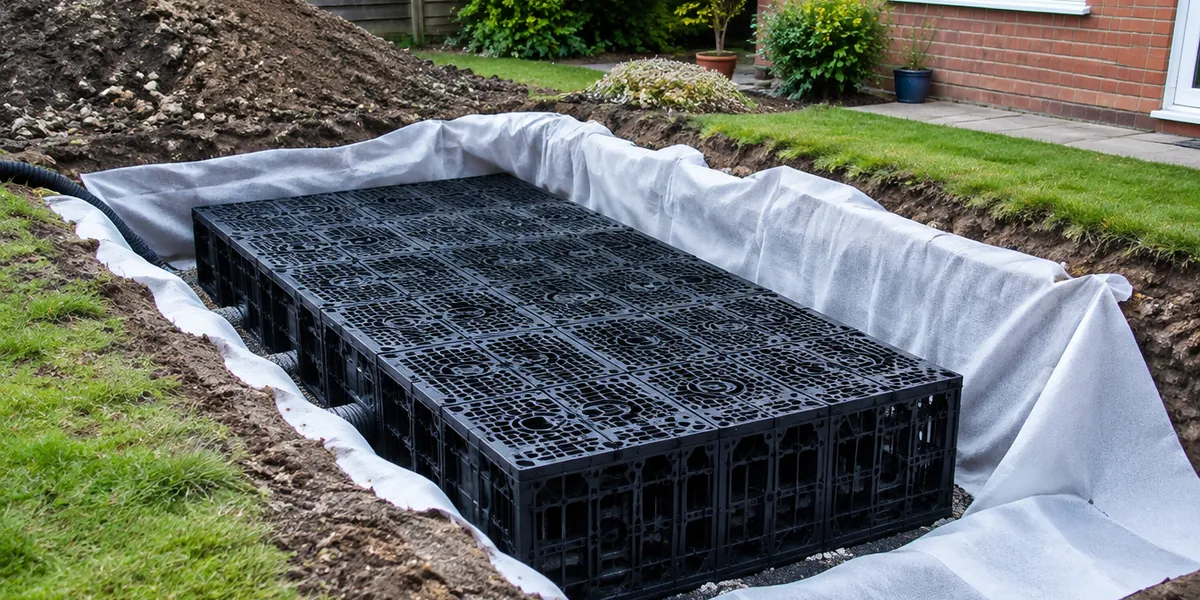 Garden Drainage InstallationFrench Drain Installation, Garden Gully Installation, Soakaway Installation
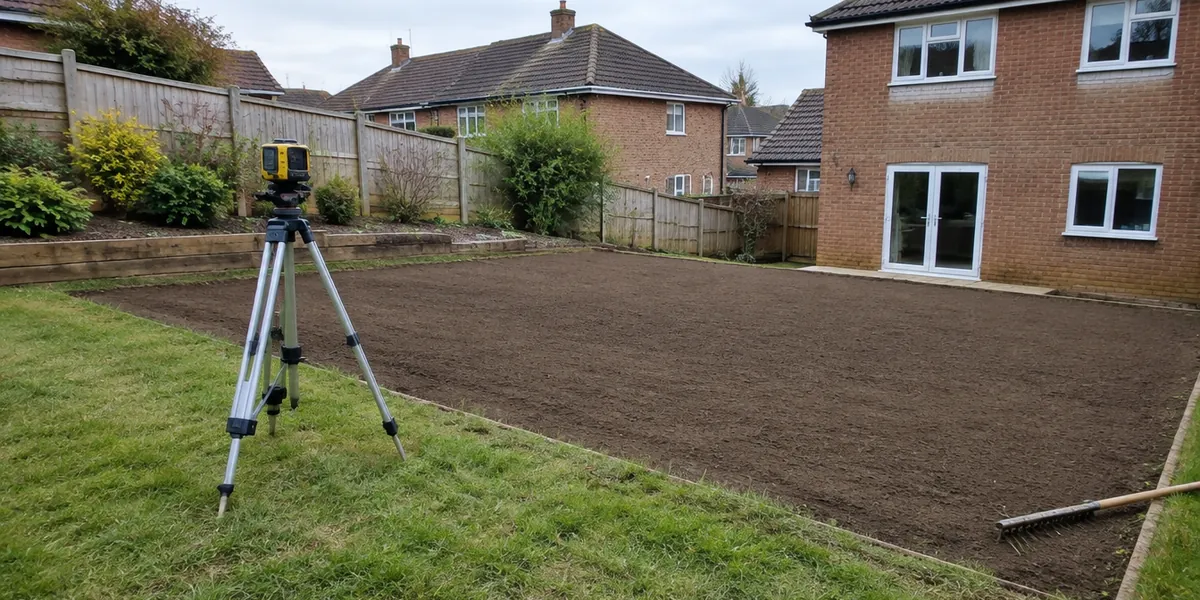 Garden Levelling and GradingGarden Regrading, Lawn Levelling, Drainage Swale Grading
Where We Offer Garden Drainage and Levelling Services We Offer in Littleborough
Water problems in Littleborough gardens usually come down to two things: the soil does not let water through fast enough, or the ground is shaped so that water collects in the wrong place. Often it is both. Our three services deal with each cause and with the damage it leaves behind.
Garden drainage installation is for ground that stays wet. We install French drains to intercept and carry water, gullies to collect surface run-off from paving and lawns, and soakaways to let the collected water disperse into the subsoil. Garden levelling and grading is for ground that is the wrong shape: humps and hollows in a lawn, a back garden that slopes towards the house, a plot with a change of level that needs terracing or a gentle regrade. Erosion control is for slopes and banks where rain strips the surface, using matting, stabilising planting and vegetated buffers to hold the soil.
We pick the method from what the ground tells us. Clay subsoil, where you have it, often rules out a simple soakaway and calls for a different approach. High water tables, tree roots, existing services and the 5 m² permeable-surface planning rule for front gardens all shape the design. Everything is quoted in writing, with a drawing where levels are involved.
Garden Drainage Installation in Littleborough
Garden drainage installation moves water from where it sits to where it can go. French drain installation is the workhorse: a trench typically 400 to 600 mm deep, lined with geotextile, holding a perforated pipe on a bed of clean 20 mm stone and backfilled with more stone. Laid to a fall of around 1 in 100 along the wet edge of a lawn or across a slope above a patio, it intercepts water moving through the topsoil and carries it to an outlet.
Garden gully installation deals with surface water. A gully is a grated collection point set at the low spot of a path, patio or lawn, connected by solid pipe to a drain or soakaway. We also fit linear channel drains along the edge of paving where it meets a house wall or a door threshold, which stops water pooling against the damp-proof course.
Soakaway installation gives the water somewhere to go. A modern soakaway is a pit of plastic crates wrapped in geotextile, sized by a percolation test on the actual soil in your Littleborough garden and set at least 5 m from the house. Where the subsoil is heavy clay and will not take water, we say so and design around it, using an existing surface-water drain where one is available.
The best drainage schemes combine all three: a French drain to collect, a gully for surface water, a soakaway to dispose. We dig trial holes before quoting so the design is based on the ground, not a guess.
Garden Levelling and Grading in Littleborough
Levelling and grading changes the shape of the ground. Garden regrading is the big version: cutting high ground, filling low ground and re-forming the surface so it falls gently away from the house and towards a drain, a soakaway or a planted swale. On a sloping Littleborough plot it can mean creating two or three level terraces separated by retaining walls or planted banks, which turns an unusable slope into lawn and patio.
Lawn levelling is the finer work. An old lawn develops hollows where soil has settled over former beds or trenches, and humps where roots or old foundations sit close to the surface. We treat small dips by top-dressing with a sand and loam mix, repeated over a season. Larger undulations mean lifting the turf, adjusting the soil beneath, compacting it in layers and relaying or returfing. The aim is a surface a mower can cut evenly without scalping.
Drainage swale grading shapes a shallow, broad channel across a lawn or along a boundary to collect and slow run-off. A swale is grassed or planted, so it reads as part of the garden rather than a ditch, and it is one of the cheapest SuDS features a domestic garden can have. We grade swales with a laser level so they hold a consistent fall and do not pond at one end.
Levels affect everything that follows, which is why we regrade before we build, compacting fill in 150 mm layers and checking finished levels before any surface goes down.
Erosion Control on Sloping Gardens in Littleborough
Any bare slope in Littleborough steeper than about one in three will lose soil to rain unless something holds it. The signs are rills cut into the surface, soil spread across the path or patio below, and plants at the top of the bank gradually losing their footing. Erosion control stops the loss and establishes a surface that protects itself.
Erosion control matting is the first step on most banks. We use biodegradable jute or coir matting pegged over the graded slope, which breaks the force of rain, holds seed and soil in place and rots away over two to three years as roots take over. On steeper or more exposed slopes we use a longer-lasting synthetic mat or a cellular confinement grid filled with soil.
Slope stabilisation planting is what does the long-term work. Deep-rooted grasses, ground-cover shrubs and small trees chosen for the aspect and soil bind the bank together. We plant through the matting at close spacing, mulch, and water in, with drip irrigation where the slope is too dry to establish plants reliably.
Vegetated buffer planting is a strip of dense planting at the bottom or top of a slope, or along a watercourse or boundary, that slows run-off, filters silt and takes up water. It is a SuDS measure in its own right and softens a drainage scheme visually. Where a bank is too steep or too loaded to hold with planting alone, we build a timber or gabion retaining structure first and plant above and in front of it.
Why Homeowners in Littleborough Choose Us for Garden Drainage and Levelling
Drainage and levelling are jobs where shortcuts hide underground for a year and then show up as a flooded lawn or a sunken patio. We do the groundwork properly: trial holes and percolation tests before we design, geotextile around every stone-filled trench, perforated pipe laid to a measured fall, fill compacted in layers, and levels set with a laser and checked before any surface goes on.
We think about where the water goes. A scheme that drains your Littleborough lawn into next door's is not a scheme. We route to a soakaway sized for your soil, to an existing surface-water drain or to a swale, and never into a foul sewer or a combined sewer without the right connection.
Because we also build patios, lay lawns and plant gardens, the drainage and levelling work is designed with what comes next in mind, and we can carry the whole project through from first dig to finished garden. Quotes are written and itemised. Our team is insured, we are registered waste carriers for the spoil that regrading produces, and the work comes with a written guarantee.
How We Work
- Site visit after rain if possible. We look at where water sits, where it comes from and where it could go, and check for services, tree roots and boundaries.
- Trial holes and tests. We dig to see the soil profile and, where a soakaway is planned, run a percolation test to measure how fast the subsoil takes water.
- Design and written quote. You receive a plan showing drain runs, outlets, finished levels or the planting scheme, with an itemised quote.
- Setting out. Drain routes, gully positions and finished levels are marked with pegs, string and paint before any excavation.
- Groundworks. Trenches are dug to the correct fall, soakaways excavated, high ground cut and low ground filled and compacted in layers.
- Installation and reinstatement. Pipes, stone, geotextile, gullies, matting and planting go in, then topsoil and turf or surfacing are reinstated.
- Check and handover. We test drains with a hose, check levels against the plan and leave you a drawing of what is underground.
Drainage and levelling in Littleborough is best done in autumn or spring when the ground is workable, and before any lawn, patio or planting it is meant to protect.
Garden Drainage and Levelling Around Littleborough
We carry out drainage and levelling work in every part of Littleborough. If your garden in Smithy Bridge or Wardle is on heavier soil, a French drain or swale is often the answer, with any soakaway sized carefully. If your plot in Hollingworth Lake slopes, regrading, terracing and erosion control are the usual fixes. In Calderbrook and Summit, if your garden is older and the ground has settled over the years, lawn levelling and a gully or two usually put it right. If you are anywhere in Littleborough or nearby Rochdale, Todmorden and Shaw, we can visit, dig a trial hole and quote.
If you are looking for landscapers in Littleborough who also build driveways, you are in the right place.
Common Questions
How do I know whether my garden needs drainage or just levelling?
Dig a hole about 300 mm deep after rain and watch it. If it stays full for a day or more, the subsoil is not taking water and you need drainage. If the garden only puddles in low spots that empty within a few hours, regrading may be enough. In Littleborough it is often a mix, and we test the soil on the site visit before recommending either.
Can I connect garden drainage to my house drains?
Only to a surface-water drain, never to the foul sewer, and on a combined system you may need the water company's agreement. Many properties have a surface-water drain taking roof water, and a garden gully can often join it. Where there is no suitable drain, a correctly sized soakaway at least 5 m from the house is the usual answer.
Will a soakaway work in clay soil?
Sometimes, but often not well. A percolation test tells us. Heavy clay can take water so slowly that a soakaway would need to be enormous to cope with a storm. In that case we look at a surface-water drain connection, a swale or a planted rain garden instead, or a larger, shallower soakaway in a more permeable layer if the trial hole finds one.
How long does garden levelling take to settle before I can lay a lawn?
If fill is compacted properly in 150 mm layers as it goes in, it should not need to settle and turf can follow straight away. Loose fill left to settle on its own can take a full season and still sink unevenly. For top-dressing an existing lawn, we apply thin layers over a growing season so the grass grows through each one.
Do I need planning permission for drainage or levelling work?
Usually not for drainage or modest regrading within a garden. Significant changes of level, retaining walls above a certain height near a boundary or road, work in a conservation area, or anything affecting a tree with a preservation order may need consent. We flag anything in Littleborough that might need checking with the council before we quote.
What is the best time of year for drainage and erosion control work?
Autumn and early spring are ideal. The ground is workable, you can see where water collects, and matting and stabilisation planting have time to establish before summer drought or winter storms. We avoid working saturated clay in midwinter because machinery and foot traffic damage its structure. Lawn levelling by top-dressing is best from April to September while the grass is growing.