We provide driveway installation throughout the OL12 and OL15 postcode districts of Littleborough, from Smithy Bridge to Hollingworth Lake, and in nearby Rochdale, Todmorden and Shaw. If the drive needs a dropped kerb, the application goes to Rochdale Borough Council as the highway authority; we help with it and keep front-garden surfaces within the permeable-surface rules. To book a free visit, call 07886 065 535 or email [email protected].
Littleborough Landscaping & Driveways installs new driveways across Littleborough for homeowners who want off-street parking that drains properly, holds its shape under a car and still looks right ten winters from now. We dig out, lay the sub-base, sort the drainage and finish the surface ourselves, so there is one team on site from the first skip to the final sweep. Our driveway installation covers concrete, tarmac, block paving, gravel and resin, and we will talk through which one suits your house, your budget and your frontage.
Most of the work we do in Littleborough falls into two camps. The first is a front garden that has never had hard standing, where we are creating parking from scratch and need to think about the dropped kerb, the 5 m² permeable surface rule and where the rainwater goes. The second is an old surface that has had its day, covered under our Driveway Replacement pages. Either way the ground preparation decides whether the driveway lasts, and that is where the time and money go.
Everything starts with a site visit. We measure, check levels against the damp-proof course and the public footway, lift a manhole cover or two and give you a written quote that itemises excavation, sub-base, edgings, drainage and the surface itself.
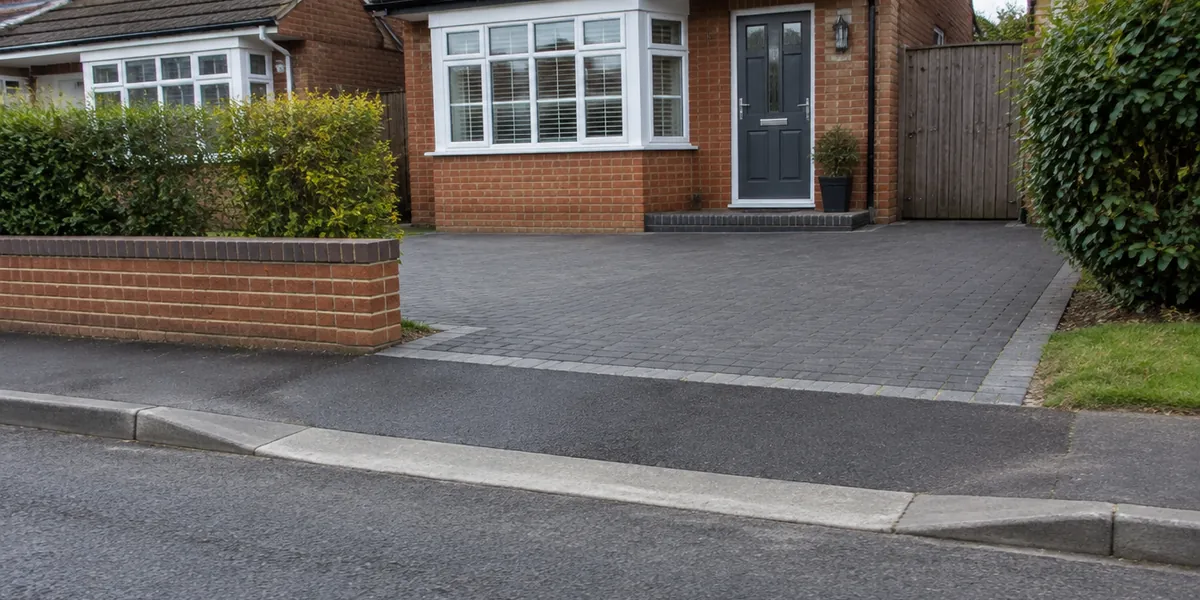 Dropped KerbsDropped Kerb Applications, Dropped Kerb Construction, Widening an Existing Dropped Kerb
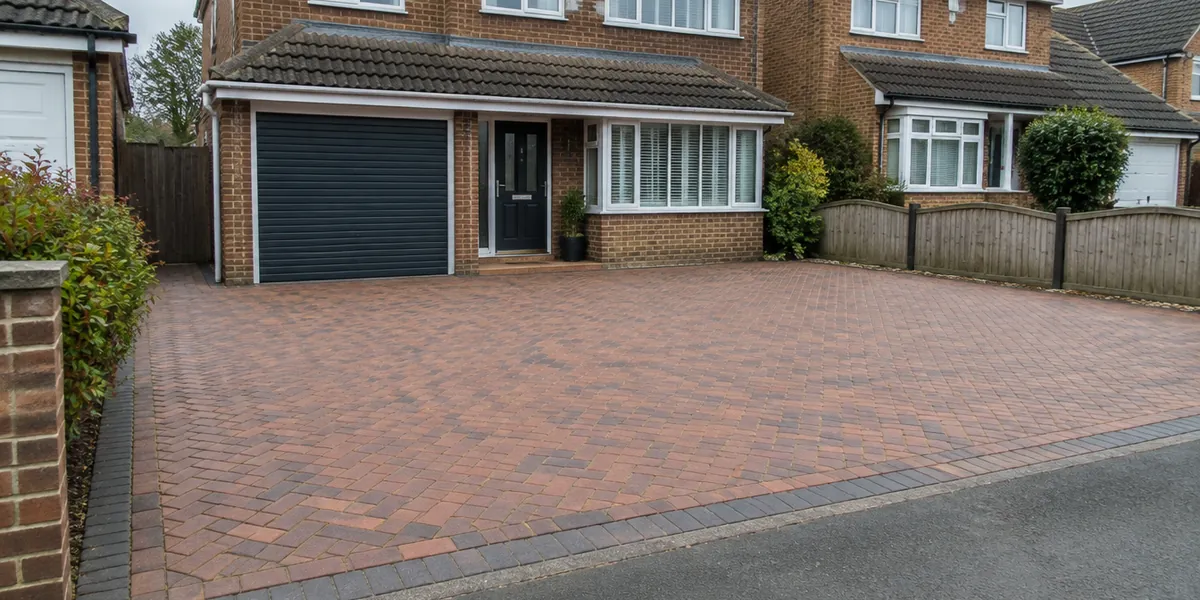 Driveway Extensions and WideningDriveway Widening, Front Garden to Driveway Conversion, Matching an Extension to Your Existing Drive
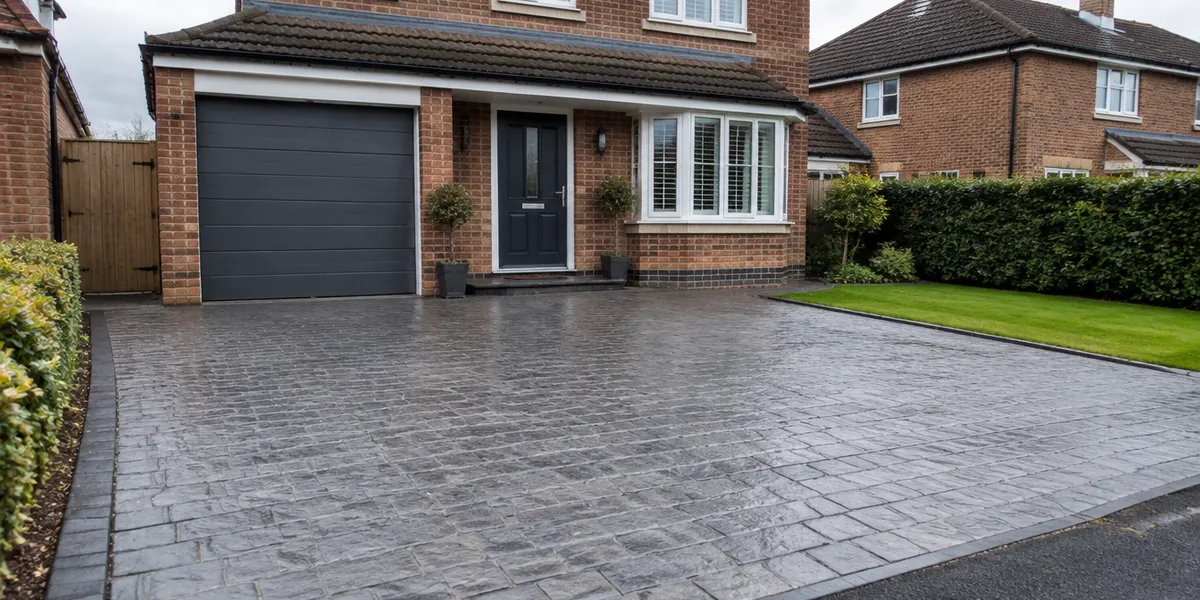 Concrete Driveway InstallationPlain Concrete Driveways, Pattern Imprinted Concrete Driveways, Exposed Aggregate Concrete Driveways
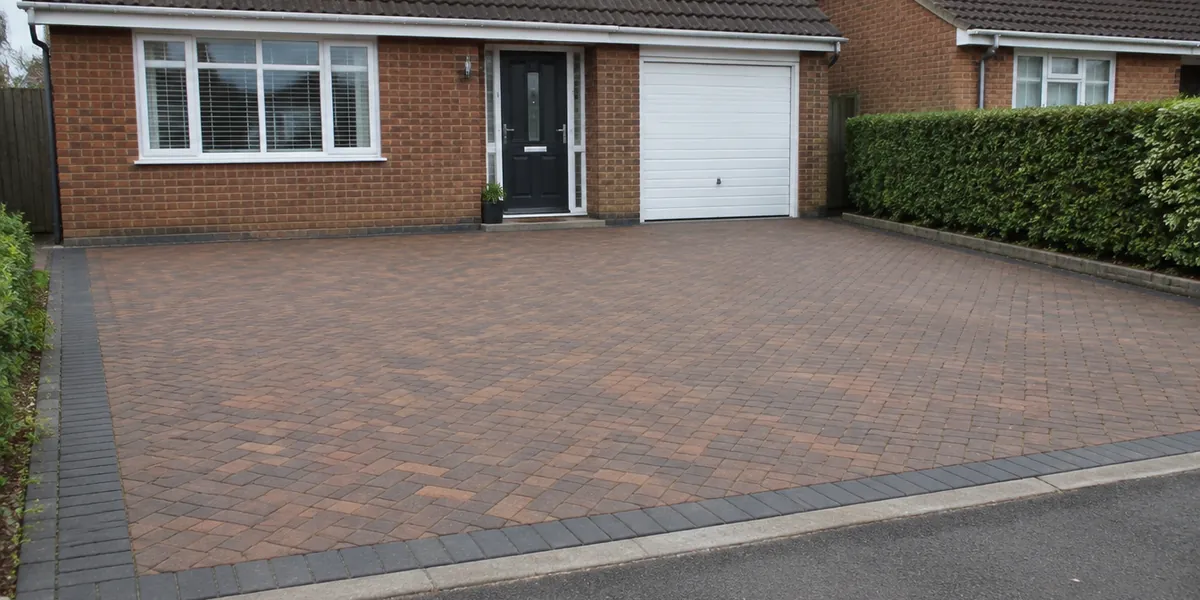 Block Paving Driveway InstallationConcrete Block Paving Driveways, Clay Brick Driveways, Natural Stone Driveways
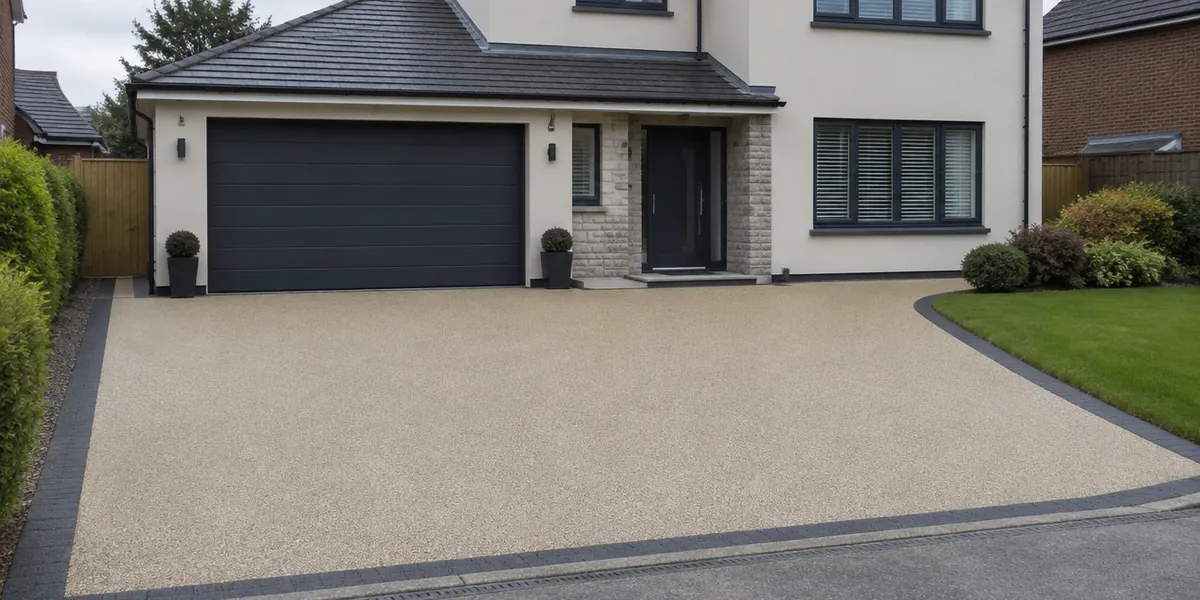 Resin Driveway InstallationResin-Bound Driveways, Resin-Bonded Driveways
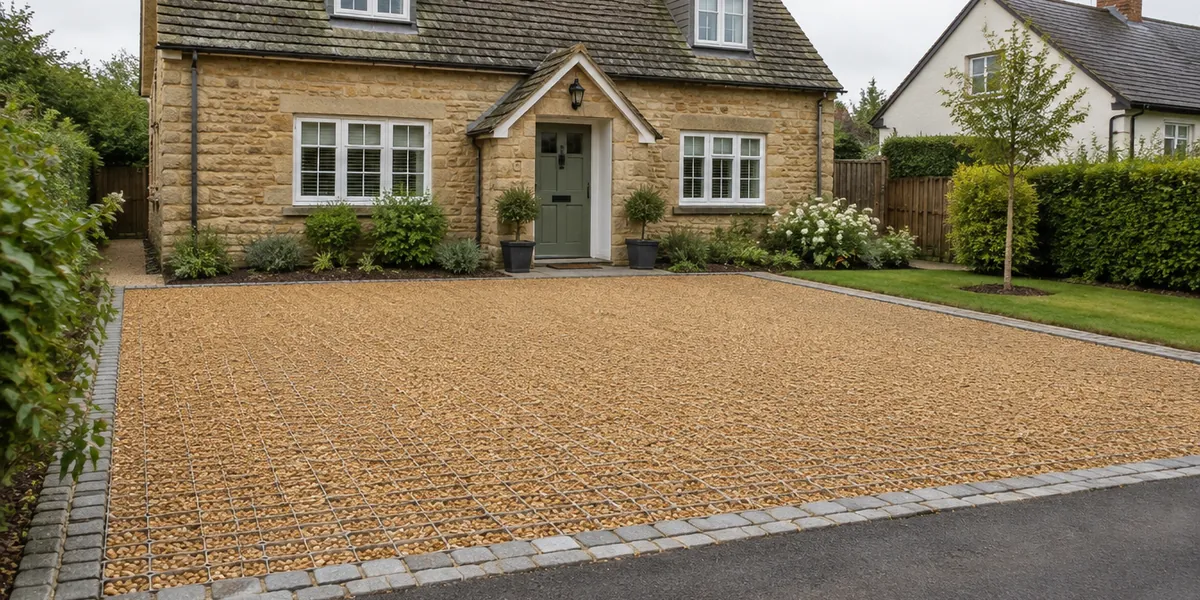 Gravel Driveway InstallationLoose Gravel Driveways, Crushed Stone Driveways
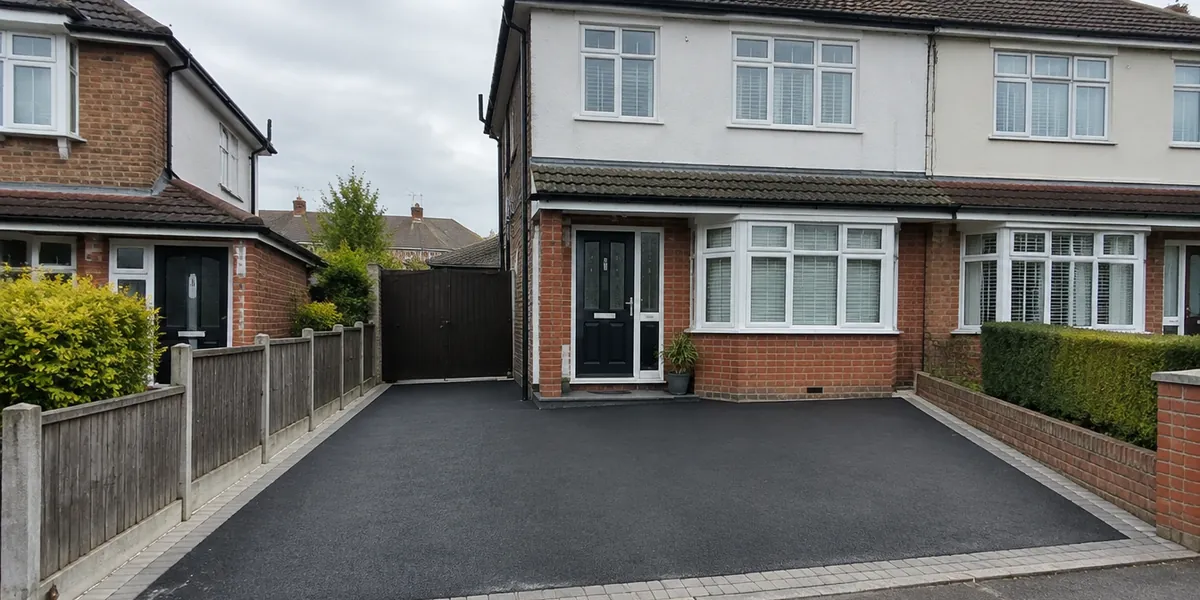 Tarmac Driveway InstallationHot-Rolled Tarmac Driveways, Porous Tarmac Driveways
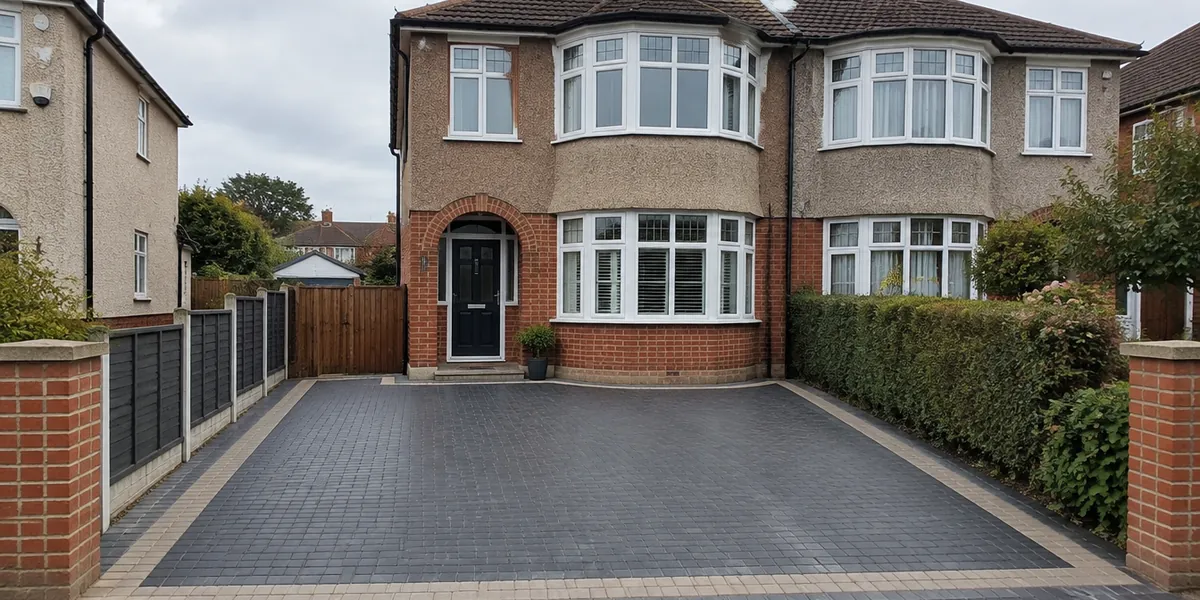
Driveway Installation Services We Offer in Littleborough
Every driveway we build in Littleborough shares the same bones: a compacted Type 1 MOT sub-base, solid edge restraints set in concrete haunching, and a fall of at least 1 in 80 towards a drain, a soakaway or a permeable area of garden. What changes is the surface, and that is where the choices begin.
Concrete suits a plain, hard-wearing slab or a pattern imprinted finish. Tarmac is quick to lay and gives a dark, uniform surface that copes well with heavy family cars. Block paving in concrete, clay or natural stone gives the most design freedom and can be lifted and relaid if services ever need digging up. Gravel is the budget-friendly option for longer drives and rural plots. Resin-bound stone gives a smooth, porous finish with no loose stones.
- Concrete driveways, plain, pattern imprinted or exposed aggregate
- Tarmac driveways, hot-rolled and porous
- Block paving driveways in concrete, clay brick and natural stone
- Gravel and crushed stone driveways with stabilising grids
- Resin-bound and resin-bonded driveways
Not every job is a new drive from scratch. Driveway Extensions and Widening adds space beside an existing drive or turns a front garden into parking, matched to what is already there. Dropped Kerbs covers the council application for a vehicle crossover and the work at the pavement edge, so the new drive can actually be used.
We also handle the smaller things around the driveway that get forgotten: linear drains at the garage door, paths to the front door and low retaining walls.
Concrete Driveway Installation in Littleborough
A concrete driveway is poured in one go over a prepared sub-base, then floated and either left plain, brushed, stamped with a pattern or washed back to expose the aggregate. In Littleborough we usually lay a 100 mm slab of C35 air-entrained concrete on 150 mm of compacted Type 1, with A142 mesh in the middle third and control joints sawn or formed every 3 to 4 metres so the slab cracks where we want it to, not where it wants to.
Plain concrete driveways are the cheapest to build and the easiest to keep clean. A brushed finish gives grip in frost. Pattern imprinted concrete driveways use a coloured hardener and release agent, then rubber mats pressed into the wet surface to mimic cobbles, slate or fan-pattern setts, sealed afterwards to lock in the colour. Exposed aggregate concrete driveways have the top layer of cement paste washed away a few hours after the pour to reveal the stone, which gives a textured, non-slip finish that hides tyre marks well.
Concrete is not permeable, so on a front garden in Littleborough we either pour it with a fall to a lawn or border, fit a channel drain across the threshold, or build a soakaway. The slab needs seven days before it carries a car and a month to reach full strength, so we plan concrete pours around the weather and away from frost.
Tarmac Driveway Installation in Littleborough
Tarmac remains one of the most common driveway surfaces in the UK for a reason: it is laid hot, rolled flat and ready to drive on within a day or two. We lay it in two courses over a compacted sub-base, a 50 to 60 mm binder course of 20 mm dense bitumen macadam followed by a 25 to 30 mm surface course of 6 mm or 10 mm close-graded material, each rolled while the mix is still above 100°C.
Hot-rolled tarmac driveways are the standard black finish most people picture, and we can add a red or buff pigment for a different look. Porous tarmac driveways use an open-graded mix that lets rain drain straight through into a free-draining stone layer below, which keeps you on the right side of the permeable surface planning rules without needing a soakaway. Both need proper edge restraints, usually a concrete kerb or a row of block paving set in haunching, because tarmac with an unsupported edge crumbles.
The things that make a tarmac driveway last are a thick enough sub-base, good compaction at the edges and keeping the mix hot during laying. A tarmac drive laid cold with a thin binder course will ripple under a turning tyre within a couple of summers, and we have replaced plenty of those around Littleborough.
Driveway Extensions and Widening in Littleborough
When one parking space is no longer enough, extending the drive you have is often quicker and less disruptive than starting again. Driveway Extensions and Widening covers three jobs: Driveway Widening, adding a strip alongside an existing drive; Front Garden to Driveway Conversion, turning lawn and borders into hard standing; and Matching an Extension to Your Existing Drive, so the new section blends in with the old.
The join is where extensions fail, so we cut back to sound material, step the new Type 1 sub-base into the existing one and compact right up to the edge. For block paving we source the same manufacturer and range where we can, mix blocks from several packs and sometimes relay a band of old paving across the join to blend the colours.
New hard surface over five square metres in a front garden must be permeable or drain to a permeable area, so we design falls, edge drainage and surface choice around that rule. If the wider drive needs a wider pavement crossing, we link the job to a council application. The Driveway Extensions and Widening page covers each stage and the cost factors.
Dropped Kerbs in Littleborough
A new or wider drive is only usable if the car can cross the pavement legally. In England that needs a vehicle crossover approved by the council as highway authority. Our Dropped Kerbs service covers three areas: Dropped Kerb Applications, Dropped Kerb Construction and Widening an Existing Dropped Kerb.
For applications, we measure the frontage, check whether there is enough depth for a car to park without overhanging the footway, note visibility, street trees, lampposts, gullies and covers, and prepare the drawings. Planning permission is needed as well on classified roads, for listed buildings and for flats. We tell you at the survey if an application looks unlikely to succeed.
Work on the public footway must be done by the council or a contractor it has approved, with street works accreditation and public liability insurance. Where your council allows approved contractors, we carry out the crossover work; where the council does its own, we build the driveway behind it and co-ordinate. Widening an existing crossover follows the same approval route. The Dropped Kerbs page explains the process in full.
Block Paving Driveway Installation in Littleborough
Block paving is a flexible pavement: individual blocks bedded on sharp sand over a compacted Type 1 sub-base, locked together with kiln-dried jointing sand and vibrated with a plate compactor so the whole surface works as one. We lay to BS 7533, which sets out the sub-base depth, bedding thickness and jointing that stop blocks rocking or sinking under a car.
Concrete block paving driveways offer the widest range of colours, sizes and textures, from plain rectangular blocks in a herringbone pattern to tumbled cobble-effect sets. Clay brick driveways cost more but the colour runs right through the brick and will not fade, which is why they suit older houses and homes in conservation areas. Natural stone driveways in granite or sandstone setts are the premium choice and need a thicker bed and sometimes a bound base to cope with the varying block thickness.
Herringbone at 45 or 90 degrees is the strongest bond for a driveway because the joints never line up in the direction of travel. Permeable block paving with wider joints filled with grit lets rain soak through and counts as a permeable surface. A real advantage of block paving in Littleborough is that if a water main needs attention, the blocks lift and the same blocks go back with no visible patch.
Gravel Driveway Installation in Littleborough
Gravel is quick to install, naturally permeable and the right choice for long drives, rural plots and anyone who wants the crunch underfoot that announces a visitor before the doorbell. A good gravel driveway is not just stone tipped on soil. We strip the topsoil, lay a geotextile membrane, build up 100 to 150 mm of compacted Type 1 and then dress the surface with a 30 to 40 mm layer of 10 to 20 mm angular gravel.
Loose gravel driveways use decorative stone such as golden flint, Cotswold chippings, slate or granite, chosen for colour and how it sits against the house. We lay a honeycomb stabilising grid on sloping or heavily used sections, which stops the stone migrating and makes the drive easy to push a pram or a bin across. Crushed stone driveways use an angular crushed limestone or granite that locks together under compaction and gives a firmer surface at a lower cost, which works well on working drives and access tracks.
Edging matters more with gravel than any other surface. Without a timber, steel, concrete or brick edge the stone spreads onto the lawn and the public footway. We also set the finished gravel level about 20 mm below any door threshold and fit a short run of block paving or a drainage grid at the road so stone does not get kicked out onto the carriageway.
Resin Driveway Installation in Littleborough
Resin driveways give a smooth, joint-free surface without loose stones, in a range of natural aggregate colours, and have become one of the most requested finishes in Littleborough over the past few years. There are two very different products under the same name and it pays to know which one you are being quoted for.
Resin-bound driveways mix dried aggregate with a UV-stable polyurethane resin in a forced-action mixer, then trowel the mix onto a prepared base at 15 to 18 mm thick. The finish is porous, because the stones are coated rather than filled, so rain drains through into the base beneath. That makes a resin-bound drive a SuDS-compliant permeable surface, provided the base underneath is open-graded tarmac or permeable concrete rather than a sealed slab.
Resin-bonded driveways work the other way round: a thin coat of resin is spread over an existing solid surface and dry aggregate is scattered on top. It looks like gravel, feels rougher underfoot and is not permeable, so it needs the existing drainage to be sound. It is a cheaper way to refresh a tired concrete or tarmac drive that is structurally fine.
Resin needs a dry day above 5°C and a dependable base, so we will not lay resin-bound over cracked concrete or fresh tarmac.
Why Homeowners in Littleborough Choose Us for Driveway Installation
The driveways that fail in Littleborough nearly always fail from underneath. A thin sub-base, no edge restraint, a surface laid over old topsoil, no thought about where the water goes. We have dug plenty of them out, and it has shaped how we build. Every driveway we install sits on compacted Type 1 at a depth suited to the ground, with edges set in concrete and a drainage plan agreed before anyone picks up a shovel.
You deal with the same people from quote to completion. We give a fixed written quote that lists what is included, we register as a waste carrier so your old surface and spoil are disposed of legally, and we carry public liability insurance for every job. Each driveway comes with a written guarantee covering workmanship.
We are also straight with people. If a resin drive is the wrong choice for your sloping front garden, or your budget is better spent on a thicker sub-base than on a fancy border, we will say so. Being based in Littleborough means we are around if anything needs looking at afterwards.
How a Job Runs
- Site visit and survey. We measure the frontage, check falls towards the house and the road, look at existing drains and services, and ask how many cars you need to park.
- Written quote. You receive an itemised quote covering excavation, sub-base, edgings, drainage, surface and making good, with a start date once you are happy to go ahead.
- Permissions. If you need a dropped kerb, a planning application for a non-permeable surface over 5 m², or checks on a tree with a preservation order, we handle the paperwork with you.
- Excavation. We dig out to the agreed depth, typically 250 to 300 mm below finished level, and remove spoil in skips or grab lorries.
- Sub-base and edgings. Type 1 MOT goes in and is compacted in layers with a vibrating plate or roller, and edge restraints are set in concrete haunching to the finished line.
- Drainage. Channel drains, gullies, soakaways or a permeable build-up are installed so water leaves the driveway the way the plan says it will.
- Surface and handover. The chosen surface is laid, left to cure where needed, and we walk the job through with you and leave a care sheet before the final payment.
Most straightforward driveways in Littleborough take between three and seven working days from the first dig to handover, with concrete and resin needing a little longer before they are driven on.
Driveway Installation Throughout Littleborough
We install driveways throughout Littleborough: if your home in Smithy Bridge has a narrow frontage, creating parking usually means a dropped kerb and a compact permeable drive, while a larger plot in Wardle may have room for a turning circle and a gravel sweep. If your home in Hollingworth Lake has a single concrete strip, we can widen it into a full-width block paved or resin drive. If you share a drive with a neighbour in Calderbrook, it needs careful levels and agreement on both sides, and if your newer home in Summit came with a developer's tarmac, we can replace it with something more individual. We cover all of these and nearby Rochdale, Todmorden and Shaw.
Our driveway specialists in Littleborough handle the groundwork, drainage and finish on every job.
Frequently Asked Questions
Do I need planning permission for a new driveway in Littleborough?
Usually not, provided the surface is permeable or rainwater drains to a lawn or border within your own boundary. If you lay more than 5 m² of non-permeable surface at the front of the house and drain it to the road, you need planning permission. Listed buildings and properties in conservation areas can have extra rules, and we will check before quoting.
How long does driveway installation take?
A typical single or double driveway in Littleborough takes three to seven working days. Tarmac and gravel are at the quicker end. Block paving takes longer because of the cutting and jointing. Concrete and resin need curing time on top, so you may be parking on the road for a week or more after we finish laying.
Which driveway surface lasts longest?
Block paving laid to BS 7533 on a proper sub-base will outlast most other surfaces and can be lifted and relaid. Well-laid concrete is also very durable. Tarmac and resin-bound typically give a long service life if the base is sound. Gravel lasts indefinitely but needs topping up. In every case the sub-base matters more than the surface.
Will you arrange the dropped kerb?
Yes. A dropped kerb in Littleborough is applied for through the local highways authority, and the crossing itself is normally built by an approved contractor to their specification. We prepare the application with you, align the driveway levels to the new crossing and coordinate the timing so the drive and the kerb are finished together.
What happens to rainwater from a new driveway?
It has to go somewhere other than the public road. Depending on the surface we design a fall to a lawn or planted border, fit a linear channel drain connected to an existing surface water drain, build a soakaway in the garden, or use a permeable surface such as porous tarmac, permeable block paving or resin-bound stone that drains through the base itself.
Can you install a driveway in winter?
We excavate and build sub-bases year round in Littleborough. Tarmac and block paving can be laid in most winter weather short of hard frost or heavy rain. Concrete and resin are more sensitive, so we avoid pouring concrete below 3°C and only lay resin on a dry day above 5°C, which sometimes means a short wait for the right window.